Navigating Jakarta’s Dynamic Office Landscape
Jakarta, as Southeast Asia’s bustling economic hub, presents a vibrant yet complex office rental market. For businesses, both established and emerging, the decision of where and how to set up an office is a critical strategic move. It’s not merely about securing a physical address; it’s about optimizing operational efficiency, managing costs, fostering productivity, and projecting a professional image. In this evolving landscape, two primary models of office space acquisition stand out: the serviced office Jakarta and the conventional lease.
Historically, the conventional lease has been the default choice, offering businesses complete control over their physical space. However, in recent years, the serviced office model has gained immense traction, particularly in dynamic cities like Jakarta, driven by a global shift towards flexibility, efficiency, and cost-effectiveness. This rise has created a pivotal decision point for many companies: which model truly aligns with their specific needs, budget, and long-term vision?
This comprehensive guide will delve deep into both options, providing a detailed comparison of their characteristics, advantages, disadvantages, cost implications, and suitability for various business types. Our goal is to equip you with the insights necessary to make an informed decision, ensuring that your chosen office solution in Jakarta propels your business forward, rather than hindering its growth. By understanding the nuances of serviced office vs conventionalleasing, you can confidently navigate Jakarta’s competitive real estate market.
Understanding the Conventional Lease: The Traditional Approach
The conventional office lease, also known as a traditional or direct lease, is the most traditional method of acquiring office space. In this model, a business (the tenant) directly rents an empty, unfurnished office unit or an entire floor from a landlord for a fixed period, typically ranging from three to five years, sometimes even longer.
What a Conventional Lease Entails:
- Bare Shell or Fitted Space: Typically, you rent a “bare shell” space, meaning an empty unit with basic utilities connections. You are then responsible for all fit-out works, including flooring, ceiling, partitions, lighting, air conditioning ducting, IT infrastructure, and furnishing. Some landlords may offer “fitted” spaces, which have basic finishes but still require furnishing and often further customization.
- Long-Term Commitment: Conventional leases almost always involve a long-term commitment. This provides stability but can be restrictive for businesses with uncertain growth trajectories or those requiring rapid scalability.
- Direct Landlord Relationship: The tenant deals directly with the building landlord or their appointed property management firm for all lease-related matters.
- Full Responsibility: The tenant assumes full responsibility for the space, including operational costs beyond the base rent.
Key Components of a Conventional Lease:
- Base Rent: This is the primary cost, usually quoted per square meter per month (IDR/sqm/month).
- Service Charge: An additional monthly fee covering building maintenance, security, cleaning of common areas, air conditioning (during specified hours), and often basic utilities. This is also typically quoted per square meter.
- Fit-Out Costs (CAPEX): A significant upfront capital expenditure. This includes design fees, construction, materials, furniture, IT cabling, and equipment. Fit-out costs in Jakarta can range significantly, from IDR 2,000,000 to IDR 8,000,000+ per square meter, depending on the desired quality and complexity.
- Utilities: While basic AC might be covered by service charge during office hours, electricity for lighting, power outlets, and often after-hours AC is typically billed separately based on consumption.
- Security Deposit: A refundable deposit, usually equivalent to 3-6 months’ gross rent (base rent + service charge), held by the landlord.
- Lease Term: As mentioned, typically 3-5 years, sometimes with options to extend. Break clauses are rare and difficult to negotiate.
- Legal Fees: Costs associated with drafting and reviewing the lease agreement.
- Management and HR: You’ll need to hire administrative staff or a facilities manager to oversee the office, handle maintenance, IT support, and manage reception duties.
- Relocation Costs: At the end of the lease, you may incur costs for reinstating the space to its original condition (“make good clause”) and moving expenses to a new location.
Advantages of a Conventional Lease:
- Complete Customization and Branding: This is arguably the biggest advantage. You have full control over the layout, design, branding, and aesthetics of your office. This allows for a space that perfectly reflects your company culture and operational workflow. For businesses with specific security or technical requirements, this control is invaluable.
- Cost-Effectiveness for Long-Term, Large Operations: For large companies with stable headcount and a long-term presence planned (5+ years), the per-square-meter cost of a conventional lease can eventually be lower than a serviced office, especially once the initial CAPEX is amortized.
- Enhanced Privacy and Security: Without other companies sharing common facilities (beyond reception/lobby), a conventional office can offer greater privacy and dedicated security measures. This is critical for sensitive operations.
- Stability and Fixed Costs (Post-Fit-Out): Once the fit-out is complete, the rent and service charges are generally stable for the lease term, allowing for predictable budgeting for core costs.
- Sense of Permanence and Ownership: Owning the fit-out and having a dedicated, bespoke space can foster a stronger sense of identity and permanence for employees and clients.
Disadvantages of a Conventional Lease:
- High Upfront Costs: The fit-out costs are a significant initial capital outlay, which can be a major barrier for startups and growing businesses. This ties up capital that could otherwise be invested in core business activities.
- Long-Term Commitment and Lack of Flexibility: The fixed lease term can be rigid. If your headcount grows rapidly or shrinks unexpectedly, you are either stuck with too little or too much space. Subleasing can be complex and may require landlord approval. This lack of flexible office space Jakarta can be detrimental.
- Time-Consuming Setup: From finding the space to design, construction, and furnishing, setting up a conventional office can take months, delaying market entry or expansion plans.
- Operational Burden: Managing the office becomes your responsibility. This includes hiring administrative staff, dealing with building management, maintaining IT infrastructure, cleaning, security, and handling unforeseen repairs. This can divert focus and resources from core business activities.
- Hidden Costs: Beyond rent and service charges, there are numerous other costs: property taxes, insurance, IT setup, daily cleaning, pantry supplies, printing, and more. These can quickly add up.
- Exit Strategy Challenges: Breaking a lease or relocating before the term ends can incur significant penalties and costs. The “make good” clause can also be very expensive.
- Depreciation of Fit-Out: Your significant investment in fit-out depreciates over time and is typically lost when you move.
Who is a Conventional Lease Best Suited For?
- Large, established corporations with stable headcounts and long-term plans (5+ years).
- Companies requiring highly specialized or custom layouts, such as laboratories, recording studios, or secure data centers.
- Businesses that prioritize complete control over branding and physical environment and have the capital to invest upfront.
- Companies with in-house facilities management expertise or resources to manage office operations.
Understanding the Serviced Office: The Flexible Solution
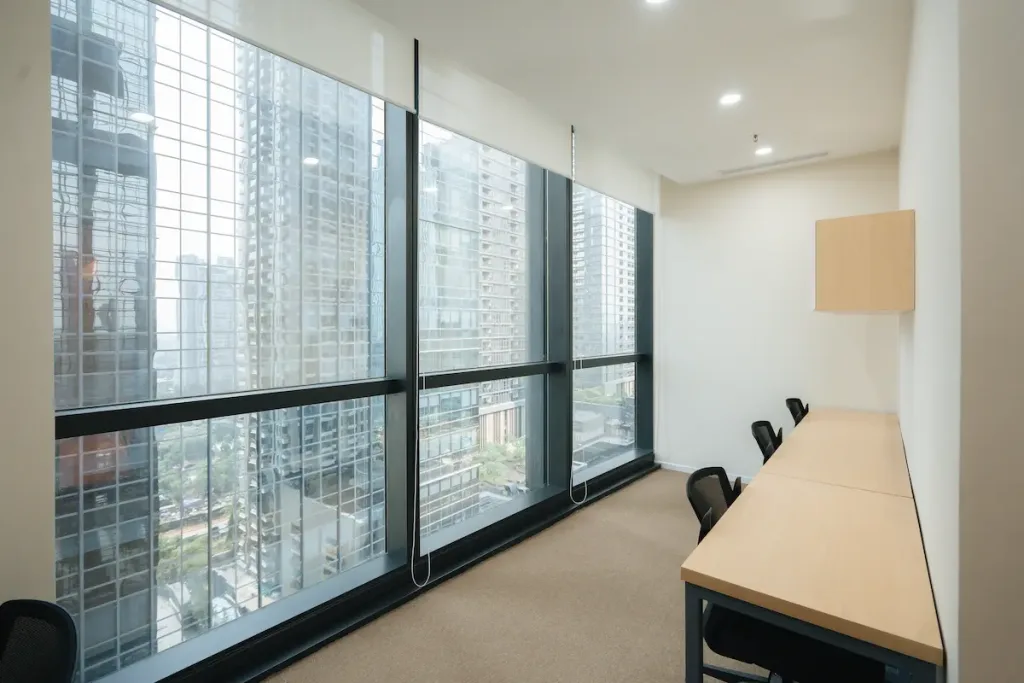
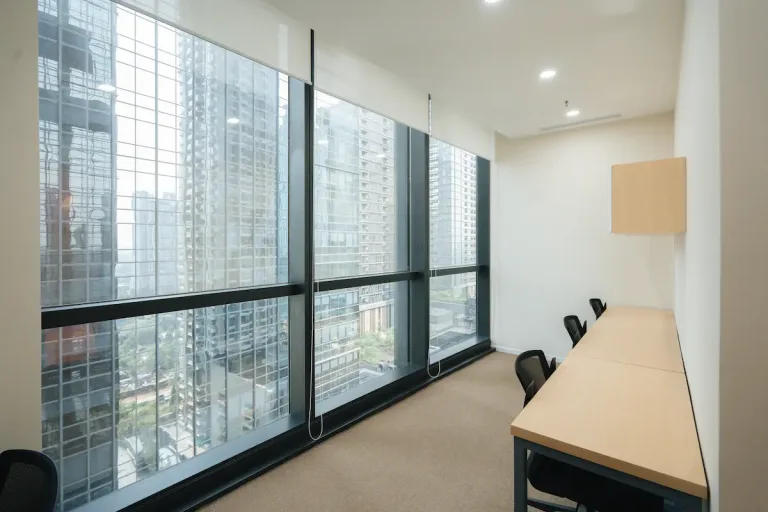
The serviced office, also known as a managed office or executive suite, offers a radically different proposition. It provides fully furnished and equipped office spaces, ready for immediate occupancy, along with a comprehensive suite of support services. Essentially, you rent a “ready-to-work” environment.
What a Serviced Office Entails:
- All-Inclusive Package: The rental fee typically covers everything: furnished private offices, utilities, high-speed internet, daily cleaning, security, reception services, and access to shared amenities like meeting rooms, pantry areas, and business lounges.
- Flexible Lease Terms: A hallmark of serviced offices is their flexibility. Lease terms can range from as short as one month to one or two years, with easy options for extension or expansion. This is the epitome of flexible office space Jakarta.
- Shared Facilities and Services: Tenants share common facilities and services, which are managed by the serviced office provider.
- Managed by a Provider: You interact with the serviced office provider (e.g., Regus, WeWork, CoHive, etc.) rather than the building landlord.
Key Components of a Serviced Office (Typically Included in One Fee):
- Private Office Space: A fully furnished and ready-to-use office for your team.
- Utilities: Electricity, water, air conditioning.
- High-Speed Internet: Reliable and secure internet connectivity.
- Furniture and Fit-Out: All necessary office furniture (desks, chairs, filing cabinets) is provided.
- Daily Cleaning: Professional cleaning services for your office and common areas.
- Reception Services: Professional front-desk staff to greet clients, handle mail, and answer calls (often with dedicated phone numbers).
- Security: 24/7 building security and often access control systems.
- Access to Meeting Rooms: Usage of professional meeting rooms and boardrooms (often with an allowance included, extra usage billed).
- Pantry/Kitchen Facilities: Access to a shared pantry with coffee, tea, and sometimes snacks.
- Business Lounge/Breakout Areas: Comfortable common areas for informal meetings or breaks.
- Basic IT Support: Often basic troubleshooting and network management.
- Maintenance and Repairs: All property maintenance is handled by the provider.
Advantages of a Serviced Office:
- Minimal Upfront Costs: This is the most significant advantage for many businesses. There are virtually no capital expenditures for fit-out or furniture. You typically only pay a security deposit (lower than conventional) and the first month’s rent. This frees up capital for core business investments.
- Ultimate Flexibility: Short term office rental Jakarta is a core offering. You can scale up or down quickly by adding or reducing desks/offices as your headcount changes, without breaking a long-term lease. This agility is invaluable for startups, project-based teams, and rapidly growing companies.
- Immediate Occupancy: Spaces are ready to move in. You can set up your office and start working within days, avoiding lengthy setup times and allowing for rapid market entry.
- Predictable Monthly Costs: With an all-inclusive fee, budgeting becomes much simpler. Most operational costs are bundled, minimizing hidden expenses. This helps businesses understand their true serviced office cost Jakarta.
- Professional Image and Prime Location: Serviced offices are often located in prestigious Grade A buildings in prime business districts (like SCBD, Kuningan, Thamrin), providing an instant, professional corporate image without the high long-term commitment.
- Focus on Core Business: The provider handles all office management, maintenance, IT infrastructure, and administrative tasks. This allows your team to focus entirely on core business activities, increasing productivity. This is a true managed office solution Jakarta.
- Access to Premium Amenities: Even small teams can access high-end meeting rooms, advanced AV equipment, professional reception services, and business lounges that would be prohibitively expensive to set up individually.
- Networking Opportunities: Sharing common areas with other businesses fosters a community atmosphere, facilitating networking, collaboration, and potential new business opportunities.
- Reduced Risk: The short-term commitment significantly reduces financial risk in uncertain economic climates or during periods of rapid business transformation.
Disadvantages of a Serviced Office:
- Higher Per-Square-Meter Cost (Often): While upfront costs are lower, the per-square-meter rate can be higher than a conventional lease over a very long period, as the provider bundles all services and takes a margin. However, when total cost of ownership (including fit-out, utilities, staff) is considered, the calculation can shift.
- Limited Customization: While you can personalize your private office to some extent, you have less control over the overall layout, interior design, and extensive branding compared to a conventional lease.
- Less Privacy: You share common areas (reception, pantry, restrooms, sometimes even meeting rooms) with other companies, which might lead to less privacy for sensitive discussions.
- Potential for Distractions: Shared spaces can sometimes be noisier or have more foot traffic, potentially leading to minor distractions.
- Dependency on Provider: You are reliant on the serviced office provider for service quality, internet stability, and maintenance. While reputable providers are generally excellent, issues can arise.
- Community Fit: While networking is an advantage, the specific community of tenants might not always align perfectly with your company’s culture.
- Meeting Room Availability: While access is provided, popular meeting rooms might require booking in advance, and availability can sometimes be an issue during peak times if not managed well by the provider.
Who is a Serviced Office Best Suited For?
- Startups and SMEs looking to minimize upfront capital expenditure and seeking flexibility for growth.
- International companies expanding into Jakarta that need a quick, low-risk, and professional entry point.
- Project-based teams requiring temporary office space.
- Remote companies needing a physical hub for occasional meetings or a professional address.
- Businesses that prioritize agility, convenience, and a hassle-free office solution.
- Companies with fluctuating headcounts or uncertain growth projections.
- Creative agencies and tech companies that value collaboration and a dynamic, modern environment.
The Cost Comparison: Serviced Office vs. Conventional Lease in Jakarta
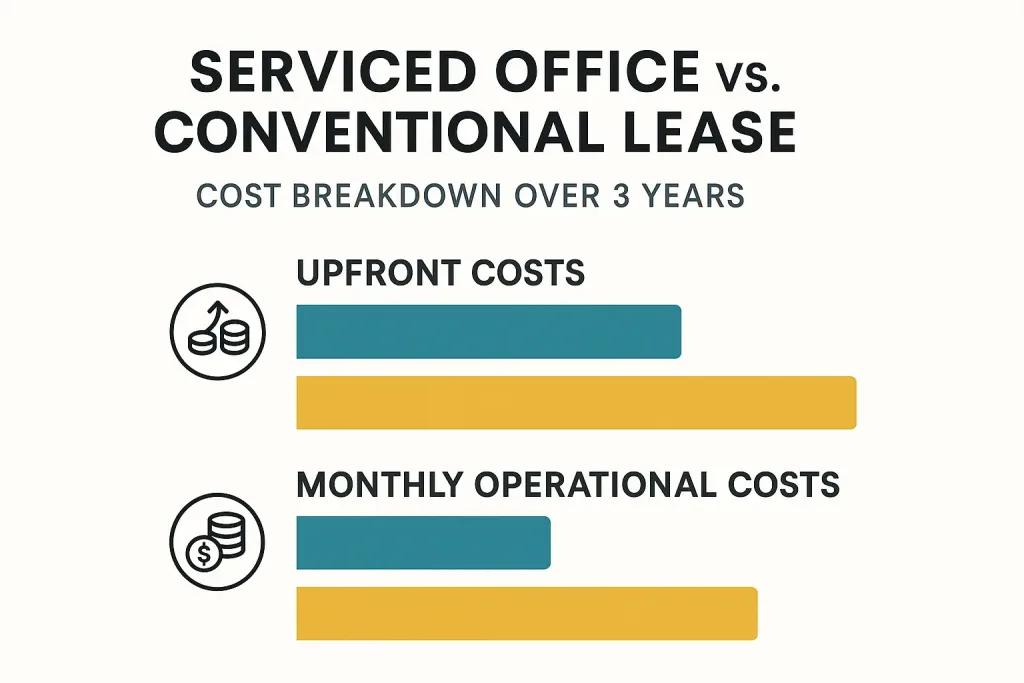
Understanding the true cost is paramount. It’s not just about the monthly rental rate; it’s about the Total Cost of Occupancy (TCO). Let’s break down the financial considerations for serviced office vs conventional in Jakarta.
Conventional Lease Cost Breakdown (Example for a 100 sqm office, Grade A building in a prime Jakarta CBD):
- Base Rent: IDR 200,000 – IDR 350,000 /sqm/month
- For 100 sqm: IDR 20,000,000 – IDR 35,000,000 /month
- Service Charge: IDR 80,000 – IDR 150,000 /sqm/month
- For 100 sqm: IDR 8,000,000 – IDR 15,000,000 /month
- Gross Rent (Base + Service): IDR 28,000,000 – IDR 50,000,000 /month
- Security Deposit: Typically 3-6 months’ gross rent.
- Example: 4 months * IDR 40,000,000 = IDR 160,000,000 (refundable)
- Fit-Out Costs (CAPEX): IDR 2,000,000 – IDR 8,000,000+ /sqm (one-time, non-refundable)
- For 100 sqm: IDR 200,000,000 – IDR 800,000,000+
- Utilities (outside service charge): Variable, depends on usage (electricity, sometimes water). Could be IDR 2,000,000 – IDR 5,000,000+ /month.
- IT Setup & Maintenance: Initial setup (cabling, servers, network equipment) can be IDR 20,000,000 – IDR 100,000,000+, plus ongoing monthly IT support.
- Furniture: IDR 50,000,000 – IDR 200,000,000+ (one-time, non-refundable)
- Staffing: Receptionist, admin, IT support, pantry staff (if not outsourced). Consider at least 1-2 full-time employees, which means salaries, benefits, etc. (e.g., IDR 10,000,000 – IDR 30,000,000 /month).
- Daily Supplies: Pantry, cleaning supplies, stationery, printing paper. (e.g., IDR 1,000,000 – IDR 3,000,000 /month)
- Miscellaneous: Insurance, property tax (sometimes separate), security system, pest control, etc.
Total Upfront for Conventional (Example, low to mid-range): Deposit (IDR 160M) + Fit-out (IDR 300M) + IT Setup (IDR 30M) + Furniture (IDR 80M) = ~IDR 570,000,000 (a substantial capital outlay)
Total Monthly for Conventional (Example, low to mid-range after CAPEX): Gross Rent (IDR 40M) + Utilities (IDR 3M) + IT Maint (IDR 2M) + Staff (IDR 20M) + Supplies (IDR 2M) = ~IDR 67,000,000 /month
Serviced Office Cost Breakdown (Example for a 10-person office in a prime Jakarta CBD):
All-Inclusive Monthly Fee:
Serviced offices are typically priced per person or per private office unit.
At Skaiwork, a 10-person setup can be accommodated with a combination of two units (e.g., 5 pax window + 5 pax non-window).
The total monthly cost would be approximately IDR 29,000,000 /month.
Security Deposit:
Typically 1–2 months’ fee.
Example: 2 months × IDR 29,000,000 = IDR 58,000,000 (refundable)
Optional Extras:
- Excess meeting room usage (beyond included hours)
- Dedicated phone line usage (beyond basic services)
- Printing beyond the allocated quota
- Specific IT configurations or dedicated bandwidth
Total Upfront for Serviced Office (Example):
Deposit (IDR 58M) + First Month’s Fee (IDR 29M) = ~IDR 87,000,000
(significantly lower than conventional lease setups)
Total Monthly for Serviced Office (Example):
All-inclusive fee (IDR 29M) + Potential Extras (IDR 1M) = ~IDR 30,000,000 /month
The “Hidden” Costs and True Value:
While the per-square-meter rate for a conventional lease might appear lower on paper, the true cost analysis must factor in:
- Lost Opportunity Cost of Capital: The significant upfront CAPEX for a conventional lease ties up capital that could be used for product development, marketing, or talent acquisition – crucial for startups and growth-oriented businesses.
- Time is Money: The months spent on fit-out for a conventional office are months of lost productivity, delayed market entry, or continued rent payments on an empty space. A serviced office allows you to start working immediately.
- Staffing Costs: The cost of hiring dedicated administrative, IT, and maintenance staff for a conventional office is often overlooked but adds substantial recurring operational expenses. These roles are essentially outsourced in a serviced office.
- Operational Headaches: The time and mental energy spent managing an office (dealing with building management, repairs, suppliers) subtracts from focus on core business. The “managed office solution Jakarta” aspect of serviced offices is a significant value proposition.
- Flexibility Premium: The ability to scale up or down easily with a serviced office avoids paying for unused space or the costly penalties of breaking a long-term lease. This flexibility has an inherent financial value in a volatile market.
Conclusion on Cost:
For startups, SMEs, and companies with fluctuating headcounts, a serviced office Jakarta almost always presents a more cost-effective and financially prudent solution due to minimal upfront costs, predictable monthly expenses, and outsourced operational burdens. For large, stable corporations planning a 5+ year presence and needing highly customized spaces, a conventional lease might be more cost-efficient in the very long run, but only if they have the capital and resources to manage the initial investment and ongoing operations efficiently. The pros and cons of serviced officesclearly favor the agile business.
Key Considerations for Your Decision
Beyond costs, several other factors should heavily influence your choice between a serviced office vs conventional lease:
1. Business Growth Trajectory:
- Rapidly Growing/Uncertain Headcount: If your business is in a high-growth phase, a serviced office’s ability to easily add or subtract desks is invaluable. A conventional lease could quickly become too small or too large, leading to inefficiencies or costly renegotiations.
- Stable/Predictable Growth: For businesses with stable headcounts or very predictable, gradual growth, a conventional lease might offer sufficient stability, provided you forecast well.
2. Company Culture and Brand Identity:
- Highly Specific Brand/Aesthetics: If your brand identity requires a very unique interior design, specific layout, or highly customized environment (e.g., a high-end fashion brand, a bespoke architectural firm), a conventional lease gives you full control.
- Modern, Collaborative, Agile Culture: Serviced offices, especially those with vibrant co-working elements, often foster a dynamic, collaborative, and modern culture, which aligns well with many startups and creative agencies. They typically have stylish, ready-made designs.
3. Operational Control and Resources:
- In-house Facilities Management: Do you have a dedicated team or sufficient resources to manage office operations, IT, and maintenance? If so, a conventional lease might be manageable.
- Focus on Core Business: If you prefer to outsource all non-core activities and focus solely on your primary business, a managed office solution Jakarta is the clear winner.
4. Timeframe and Speed to Market:
- Immediate Need/Rapid Expansion: A serviced office allows you to be operational within days, crucial for quick market entry or urgent project requirements.
- Long-Term Planning: If you have several months to plan, design, and execute a fit-out, a conventional lease timeframe might be acceptable.
5. Capital Availability:
- Limited Upfront Capital: Startups and SMEs often have limited capital to tie up in office fit-outs. Serviced offices eliminate this barrier.
- Ample Capital for Investment: Larger, well-funded corporations might have the capital to invest in a bespoke conventional office.
6. Client Perception and Meetings:
- Premium Client-Facing: Serviced offices are often in prime buildings and provide professional reception, offering an impressive first impression for clients, even for small businesses.
- Regular Client Visits: Consider how frequently clients visit. Professional meeting rooms within a serviced office are usually available, but if you need a very large, private, and always-available board room, a conventional office might be preferred.
7. IT Infrastructure Requirements:
- Standard IT Needs: For most businesses with standard internet and network needs, a serviced office provides sufficient, reliable IT infrastructure.
- Highly Specific/Secure IT: Companies with very complex, proprietary, or high-security IT infrastructure requirements might prefer the full control of a conventional office to set up their own dedicated systems. However, many modern serviced offices also offer robust and secure network solutions with dedicated VLANs.
The Jakarta Context: Why Serviced Offices are Flourishing
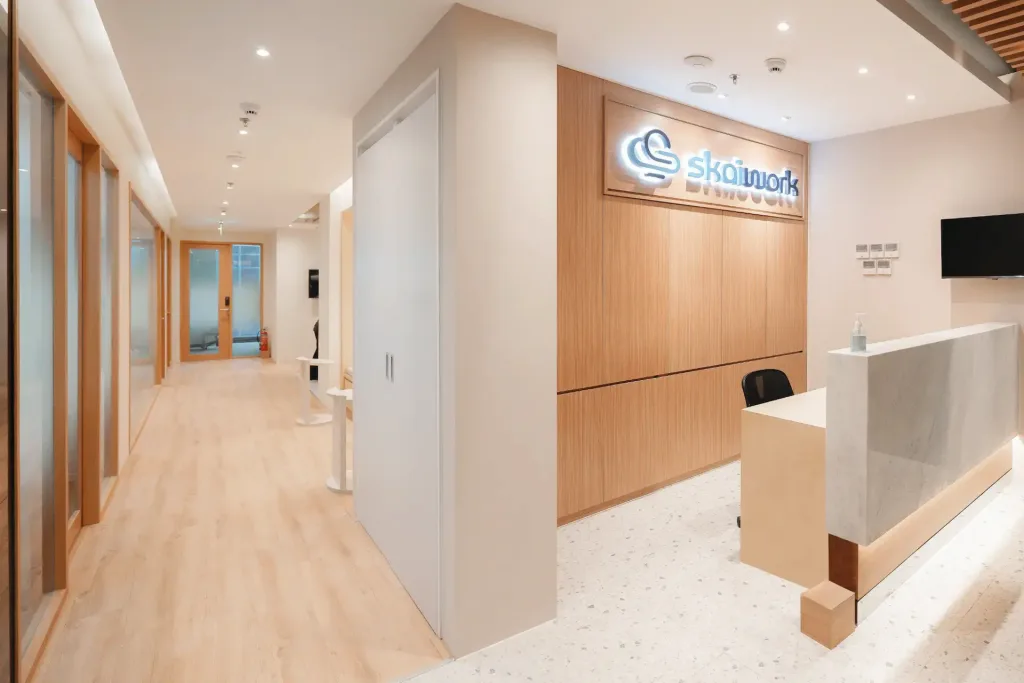
The rise of the serviced office Jakarta isn’t just a global trend; it’s particularly pronounced in this city due to several local factors:
- High Property Prices and Upfront Costs: Jakarta’s prime commercial real estate commands high prices. The significant upfront costs of a conventional lease (security deposits, fit-out) can be prohibitive for many businesses, especially given the current economic climate and competition.
- Traffic Congestion and Accessibility: Being located in a prime, accessible building with good public transport links (like MRT) is crucial in Jakarta. Serviced offices often occupy the most prestigious buildings in these highly sought-after locations, offering access that might be too expensive or complex to secure with a conventional lease for smaller tenants.
- Dynamic Business Environment: Jakarta is a hub for startups, tech companies, and multinational corporations setting up regional offices. These businesses thrive on agility and flexibility, which the serviced office model perfectly supports.
- Talent Mobility: A young, digitally native workforce in Jakarta values flexibility and a good work-life balance. Serviced offices, with their prime locations and integrated amenities, are attractive to this talent pool.
- Simplified Operations: Navigating local regulations, finding reliable vendors for maintenance, and managing administrative staff can be challenging in a new market. A serviced office significantly simplifies these operational aspects, especially for international entrants.
- Emergence of Quality Providers: The growth of reputable local and international serviced office providers (like Regus, CoHive, GoWork, WeWork) has increased the supply of high-quality, professionally managed spaces, building trust in the model.
Hybrid Solutions and the Future of Work
The lines between conventional and serviced offices are blurring, giving rise to hybrid solutions and emphasizing the broader concept of flexible office space Jakarta.
- Managed Office Solutions: Some providers now offer “managed offices” within conventional buildings. Here, you get a dedicated floor or large space, but the provider handles the fit-out, furniture, and ongoing management, giving you the best of both worlds: dedicated space with outsourced operations. This is a truly bespoke managed office solution Jakarta.
- Coworking Spaces: While often integrated into serviced office offerings, dedicated coworking spaces provide open-plan desks, hot desks, and shared amenities for individuals or small teams, fostering a strong community.
- Enterprise Solutions: Larger serviced office providers are offering “Enterprise Solutions” where they design, build, and manage a custom private office floor within their building or another building for a larger corporate client, mimicking a conventional lease but with all the operational benefits of a serviced office.
- Hub-and-Spoke Model: Many large corporations are adopting a “hub-and-spoke” strategy, maintaining a smaller, central conventional office (the “hub”) for core functions and executive teams, while utilizing serviced office Jakarta locations or coworking spaces (the “spokes”) in various neighborhoods to provide flexible, satellite offices closer to employees or clients, reducing commute times and improving agility.
- Work-From-Anywhere Policies: The post-pandemic era has accelerated the adoption of hybrid work models. Flexible office spaces support this by providing professional meeting points or occasional workspace for remote teams without requiring a full-time conventional lease.
The future of office space in Jakarta, and globally, points towards greater flexibility, agility, and a focus on employee well-being. Businesses are increasingly valuing solutions that can adapt to rapid change, minimize capital expenditure, and allow them to focus on their core competencies.
Making Your Decision: A Step-by-Step Guide
To determine whether a serviced office Jakarta or a conventional lease is right for you, consider these steps:
- Define Your Business Needs:
- Team Size & Growth: How many employees do you have now, and how many do you project in 1, 3, 5 years? How certain are these projections?
- Budget: What is your total budget (upfront and recurring)? How much capital can you realistically tie up?
- Timeframe: How quickly do you need to move in? What is your desired lease term?
- Location: What specific areas of Jakarta are essential for your business (client proximity, talent pool, lifestyle)?
- Culture & Brand: How important is a highly customized, private space versus a modern, collaborative, community-driven environment?
- Operational Resources: Do you have the internal resources (staff, expertise) to manage an office, or do you prefer outsourcing?
- IT Requirements: Are your IT needs standard or highly specialized?
- Evaluate the Pros and Cons: Objectively weigh the pros and cons of serviced offices and conventional leases against your defined needs. Create a checklist.
- Calculate True Costs: Don’t just compare monthly rent. Conduct a thorough Total Cost of Occupancy (TCO) analysis for both options over your projected lease term (e.g., 3 years). Include all fit-out, furniture, IT, utilities, staffing, and other operational costs for conventional.
- Visit Both Types of Spaces: There’s no substitute for experiencing the spaces firsthand. Visit several serviced office Jakarta providers and conventional office buildings. Pay attention to:
- The ambiance and culture.
- The quality of amenities and infrastructure.
- The professionalism of the staff.
- The connectivity and surrounding environment.
- Consult with a Specialist: The Jakarta office market is complex. Engaging a reputable real estate advisor like Skaiwork is crucial. We can provide:
- Unbiased advice tailored to your specific needs.
- Access to a comprehensive portfolio of both serviced offices and conventional leases.
- Expert market insights and negotiation support.
- Guidance on legal and contractual terms.
The Skaiwork Advantage: Your Partner in Office Solutions
Navigating the diverse and intricate office space market in Jakarta requires expertise and a deep understanding of local nuances. Whether you’re leaning towards the agility of a serviced office Jakarta or the customization of a conventional lease, Skaiwork is your trusted partner.
We specialize in providing comprehensive office space solutions across Jakarta’s prime business districts. Our commitment is to help you find an office that is not just a space, but a strategic asset that supports your growth and operational excellence.
- Extensive Portfolio: Skaiwork has access to a wide array of both conventional lease opportunities and the finest serviced office Jakarta options, including those from leading local and international providers.
- Tailored Advice: Our experienced consultants will work closely with you to understand your unique business needs, budget constraints, and long-term vision. We provide unbiased, data-driven recommendations that align with your strategic goals.
- Market Insights: We keep abreast of the latest market trends, rental rates, and emerging areas, ensuring you have the most current information to make an informed decision.
- Seamless Process: From initial consultation and property tours to lease negotiation and move-in support, we streamline the entire process, saving you time, effort, and resources. We make finding your ideal flexible office space Jakarta simple.
Browse flexible serviced office spaces in Jakarta or explore conventional lease options with Skaiwork. Let us help you secure an office solution that perfectly positions your business for success in Jakarta’s dynamic economic landscape.
A Strategic Choice for Your Business’s Future
The decision between a serviced office vs conventional lease in Jakarta is a fundamental one, with significant implications for your company’s finances, operations, and culture. There’s no universal “right” answer; the optimal choice depends entirely on your specific circumstances, current growth stage, and strategic objectives.
For businesses prioritizing flexibility, minimal upfront investment, and a quick setup, especially startups, SMEs, and international companies entering the market, the serviced office Jakarta offers an incredibly compelling and often superior value proposition. It empowers businesses to be agile, focus on core activities, and project a professional image without the burdens of traditional property management. The all-inclusive nature provides predictable expenses, allowing for better financial forecasting and reduced administrative overhead. This makes it an ideal managed office solution Jakarta for modern enterprises.
Conversely, for large, established corporations with stable, long-term plans and a strong desire for complete control over their workspace design and operational setup, a conventional lease still offers the ultimate customization and potentially a lower per-square-meter cost over very extended periods, provided they are prepared for the significant capital outlay and ongoing management responsibilities.
Ultimately, whether you opt for the agility and convenience of a serviced office or the control and permanence of a conventional lease, the key is to make an informed decision based on a thorough analysis of your unique requirements. Partnering with a trusted real estate advisor like Skaiwork can illuminate the best path forward, ensuring your office space in Jakarta becomes a launchpad for your business’s future success. Which path will you choose to empower your business in this thriving metropolis?